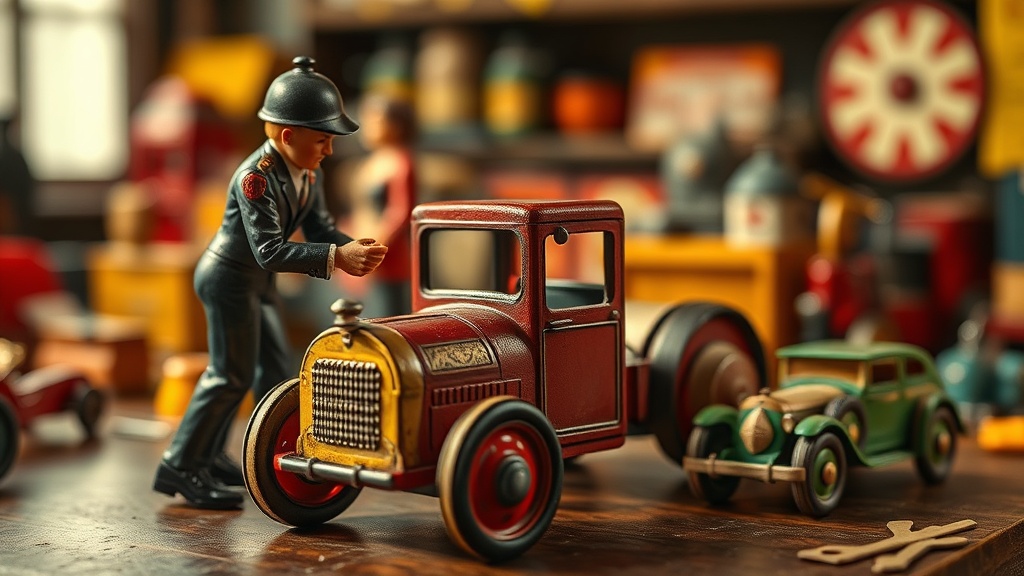
The Rise and Fall of Tin Toy Production

Have you ever wondered why the heavy, mechanical charm of a vintage wind-up toy feels so much more substantial than the hollow plastic of modern playthings? This post tracks the evolution of tin toy manufacturing, from its golden age of mechanical ingenuity to its eventual decline caused by the rise of plastics and global economic shifts. Understanding this history helps collectors identify high-quality vintage pieces and understand why certain eras of production are more valuable today.
Tin toys represent a specific era of industrial craftsmanship where metal lithography and clockwork mechanisms ruled the playroom. We'll look at the major players, the technological shifts that changed the industry, and what collectors should look for when hunting for these metal treasures.
Why were tin toys so popular in the early 20th century?
Tin toys became incredibly popular because they offered a level of tactile, mechanical complexity that early plastics simply couldn't match. During the late 19th and early 20th centuries, lithographed tin allowed manufacturers to print incredibly intricate, colorful designs directly onto metal sheets before they were even cut and folded into shapes.
This process was efficient. It allowed companies like Lehmann and Bing to produce toys that weren't just static objects, but moving, living machines. A child wasn't just holding a figure; they were operating a tiny, wind-up engine. The ability to create movement through gears and springs—rather than just battery-operated electronics—gave these toys a certain "soul" that collectors still hunt for today.
The charm came from the weight. There is a sensory satisfaction in a heavy metal car or a walking robot that a lightweight plastic toy just can't replicate. Even if the mechanism was simple, the physical presence of the object felt permanent. (Though, let's be real, if the spring breaks, it's often game over for that specific toy.)
Key characteristics of this era included:
- Lithography: High-detail printing on metal sheets.
- Clockwork: Use of wound springs for autonomous movement.
- Durability: Heavy-duty construction that could survive decades of play.
- Artistry: Many toys featured hand-finished details that gave them a unique character.
What caused the decline of the tin toy industry?
The decline of tin toy production was primarily driven by the invention of injection-molded plastics and the subsequent massive reduction in production costs. As the mid-20th century approached, the toy industry underwent a radical transformation that prioritized lightweight, cheap, and endlessly moldable materials over heavy metal components.
The math was simple for manufacturers. Plastic is cheaper to produce at scale, easier to shape into organic forms, and significantly safer for children. Metal edges can be sharp, and the intricate gears used in tin toys are much harder to mass-produce than a single plastic mold. By the time the 1950s and 60s rolled in, the "Golden Age" of tin was already fading into the rearview mirror.
A few specific factors played a role in this shift:
- The Rise of Polymers: Companies like Mattel and Hasbro began focusing on plastic-based products that could be manufactured in millions of units for pennies.
- Labor Costs: The intricate assembly required for tin-plate toys was labor-intensive. Moving to plastic allowed for more automated, less skilled production.
- Safety Regulations: As governments began regulating toy safety more strictly, the sharp edges and heavy parts of tin toys became a liability.
Worth noting is that while tin production slowed in Europe and the US, it didn't disappear—it just moved. Much of the manufacturing shifted toward Japan, which became a powerhouse for high-quality tin toys in the post-war era. These Japanese-made tin toys, often featuring robots and space themes, are some of the most sought-after pieces in the collector market today.
If you are interested in the broader history of how manufacturing changes affect value, you might find it useful to research the history of tin toys on Wikipedia, which provides a deep dive into the technical side of lithography.
How do you identify high-quality vintage tin toys?
To identify high-quality vintage tin toys, you must look for intact lithography, original wind-up mechanisms, and minimal oxidation or "tin pest." High-end collectors look for pieces that haven't been "re-painted" or had their original mechanisms replaced with modern parts.
When you're out at a flea market or browsing an online auction, you'll notice that some pieces look much better than others. This isn't always because they are "better" toys; sometimes it's just better preservation. A toy might have a beautiful paint job but a broken internal spring, which drastically lowers its value. Conversely, a toy with heavy scratches might still have an incredibly rare and functional mechanism.
Here is a quick guide for your next hunt:
| Feature | High Value Indicator | Low Value Indicator |
|---|---|---|
| Lithography | Crisp, bright colors with no fading. | Scratched, chipped, or dull paint. |
| Mechanism | Smooth, rhythmic movement. | Stuck, jerky, or missing parts. |
| Oxidation | Minimal to no rust or "tin rot." | Heavy rust or crumbling metal edges. |
| Originality | Original box and intact key. | Missing key or non-original parts. |
One thing to watch out for is "re-tinning" or heavy refurbishing. Some sellers will polish a toy to make it look brand new, but this can actually destroy the historical value of the piece. If the metal looks suspiciously shiny or the colors look too "perfect," proceed with caution. It might be a beautifully restored piece, but in the world of high-end collecting, original patina is king.
For those who are just starting to get serious about their collection, you might want to check out my guide on top 10 toy collecting tips for enthusiasts. It covers the foundational habits that will save you a lot of headaches down the road.
It's also worth mentioning that the maintenance of metal toys is different from plastic. While you don't have to worry about "plastic fatigue" (which is a real issue for vintage action figures), you do have to watch for moisture. Humidity is the enemy of tin. If you store your collection in a damp basement, you're essentially inviting rust to settle in. A dry, temperature-controlled environment is your best friend here.
If you're already deep into the world of vintage figures and want to ensure your metal and plastic pieces stay in top shape, you might find my post on preventing plastic fatigue in vintage action figure joints helpful for understanding how different materials react to age and environment.
The market for tin toys has become a niche, specialized field. Because the production methods of the past are no longer used, every surviving piece is a fragment of industrial history. Whether it's a 1930s German car or a 1950s Japanese robot, these objects tell a story of a time when toys were built to be machines. That's why they still command such high prices and passion in the community today.