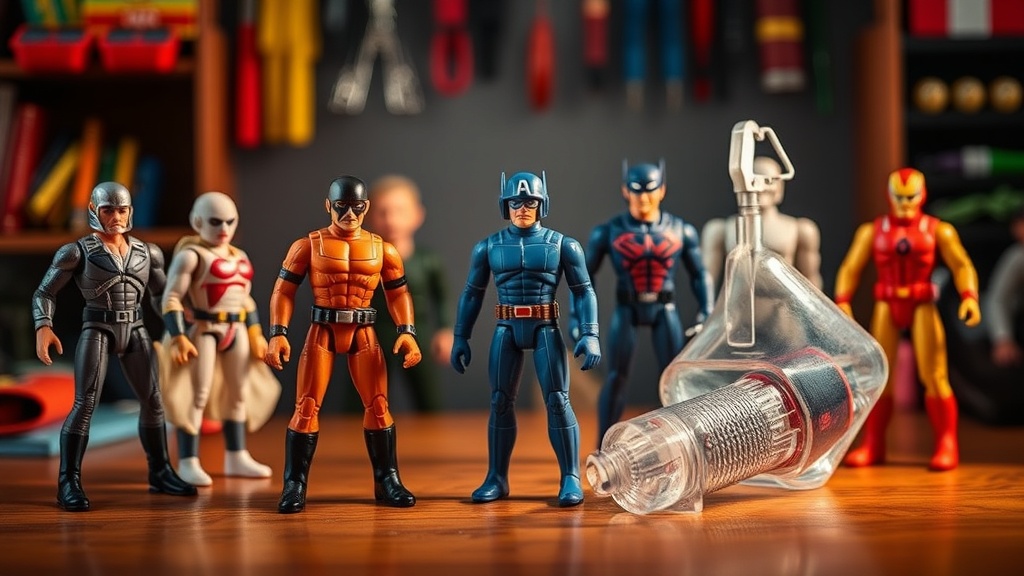
How to Clean Vintage Action Figures Without Damaging Paint or Joints

Cleaning vintage action figures requires a careful balance—remove decades of dust and grime without stripping paint, corroding joints, or causing plastic fatigue. Get it wrong, and a $200 collectible becomes a cautionary tale. This guide covers the materials, techniques, and common mistakes that separate successful restorations from ruined figures—whether you're dealing with a 1980s Kenner Star Wars figure or a 1970s Mego World's Greatest Super Hero.
What Household Items Can Safely Clean Vintage Action Figures?
Dish soap, warm water, and a soft-bristled toothbrush handle most basic cleaning jobs. That's the short answer. The longer answer involves understanding which household products cross the line from helpful to hazardous.
Here's what works:
- Mild dish soap (Dawn Ultra, Seventh Generation Free & Clear) cuts through hand oils and light dirt without leaving residue
- Distilled water avoids the mineral deposits that tap water can leave behind
- Magic Eraser (melamine foam) for scuff marks—but only on unpainted plastic surfaces
- Isopropyl alcohol (70% concentration) for sanitizing hard plastic, never for painted areas
- Cotton swabs and microfiber cloths for controlled application
Here's the thing about that Magic Eraser—it works like extremely fine sandpaper. Great for the white plastic on Stormtrooper armor that's gone gray. Disastrous on painted faces, logos, or any factory-applied details. Test on an inconspicuous spot first. Always.
Products to avoid completely:
- Bleach—yellows white plastics and weakens them over time
- Ammonia-based cleaners (Windex, most glass cleaners)—attack certain plastics and paints
- Harsh scrub brushes—scratch soft plastics and remove paint faster than you'd think
- WD-40—temporarily shiny, permanently damaging; attracts dust and degrades plasticizers
- Acetone or nail polish remover—melts most vintage plastics on contact
How Do You Clean Action Figure Joints Without Breaking Them?
Stiff joints should never be forced—warm water soaks and silicone-based lubricants restore movement without the snap-and-cry outcome. Vintage figures have decades-old plastic and metal pins that have either fused, corroded, or turned brittle with age.
The warm water method works for most stuck joints. Submerge the figure (or just the limb) in warm—not boiling—water for 2-3 minutes. The heat gently expands the plastic, loosening the connection. Work the joint slowly while it's warm. Think patience, not pressure. A joint that won't move after warming needs a different approach—not more force.
For metal pins that have rusted or corroded, a different strategy applies:
- Remove the limb if possible (some figures disassemble easily, others don't)
- Apply Kroil penetrating oil or PB Blaster to the pin
- Let it sit for 24 hours
- Work the joint gently—back and forth, not circular
- Clean thoroughly with dish soap afterward to remove all oil residue
The catch? Not all joints can be saved. Some vintage figures—particularly 1980s Mattel Masters of the Universe figures with their rubber-band torsos—have internal mechanisms that have simply degraded past recovery. Know when to stop. A display piece with limited articulation beats a bin of broken parts.
Silicone lubricant (WD-40 Specialist Silicone, not regular WD-40) helps maintain smooth joints after cleaning. Apply sparingly with a cotton swab, work the joint, then wipe away excess. Never use petroleum-based lubricants—they attack plastic over time.
Joint Types and Their Cleaning Approaches
| Joint Type | Common Examples | Cleaning Method | Risk Level |
|---|---|---|---|
| Simple pin/disc | Kenner Star Wars, early GI Joe | Warm water, gentle rotation | Low |
| Metal pin with plastic | Mego figures, Remco | Penetrating oil, 24-hour soak | Medium—pins can snap |
| Rubber band torso | MOTU, ThunderCats | External cleaning only—don't submerge torso | High—internal band may snap |
| Ball and socket | Hasbro Marvel Legends style | Warm water, work gradually | Low to medium |
| O-ring construction | 1982-1994 GI Joe | Disassemble, clean parts separately | Medium—requires reassembly |
What's the Best Way to Remove Sticky Residue From Old Action Figures?
Older plasticizers breaking down cause that tacky, sticky film common on 1980s and 1990s figures—address it with polyethylene bags, talcum powder, or careful solvent application depending on severity. This "plasticizer migration" happens when the chemicals that keep plastic flexible rise to the surface. It's not dirt; it's the figure literally sweating out its own components.
For light tackiness, the bag method works surprisingly well. Place the figure in a ziplock bag with a tablespoon of unscented talcum powder (Johnson's Baby Powder without aloe or fragrance). Seal it for 24-48 hours. The powder absorbs the migrating plasticizers. Brush off thoroughly with a soft brush afterward.
That said, severe cases need stronger intervention. A diluted solution of Simple Green (roughly 10:1 water to cleaner) applied with a cloth can cut through heavy buildup. Rinse thoroughly afterward. Some collectors swear by Renooble—a product specifically formulated for de-tackifying vintage plastics. It's pricier than household alternatives but designed for this exact problem.
Worth noting: once plasticizers have migrated, they don't go back. The figure will likely need periodic retreatment. Store affected figures in cool, dry environments—heat accelerates the process. And never, ever use Goo Gone or similar citrus-based adhesive removers. They'll cut through the tackiness, sure, but they'll also soften and deform the plastic underneath.
How Should You Dry and Store Figures After Cleaning?
Air drying on a clean towel in a dust-free environment prevents water spots and secondary contamination—rushing this step invites mold, mildew, and new grime. After rinsing (always with distilled water for the final rinse), lay figures on a lint-free microfiber towel. Position them so water drains away from joints and hollow areas.
Compressed air helps speed drying without heat. A simple electronics duster or a manual air blower (the kind photographers use for lenses) pushes water out of crevices. Avoid hairdryers entirely—even the "cool" setting can warp soft plastics. Direct sunlight? Even worse. UV exposure yellows whites and fades painted details.
Figures must be completely dry before storage. Trapped moisture in hollow torsos or joint crevices becomes a breeding ground for mold. That musty smell that older collections sometimes develop? That's moisture damage, and it devalues figures significantly. Give them 24-48 hours if you're uncertain.
When Should You Stop Cleaning and Call a Professional?
Museum-grade restoration requires specialized knowledge, tools, and materials—attempting advanced repairs at home often causes irreversible damage that professionals can't fix later. Knowing your limits separates smart collectors from regretful ones.
Consider professional help when facing:
- Paint touch-ups—matching vintage factory paint requires expertise and original color formulas
- Replacement parts—custom fabrication or donor figure surgery needs precision
- Sticker/decal restoration—water slides and vintage labels are easy to destroy
- Electronics repair—vintage talking figures, light-up features, motorized elements
- Significant yellowing—the "Retr0bright" hydrogen peroxide treatment works but is easy to overdo, creating marbling and brittleness
Professional action figure restorers—like those found through the Action Figure Forum community—have access to materials and techniques that simply aren't available to casual collectors. They understand which 1980s plastics can handle which treatments. They've seen what happens when well-meaning owners go too far.
"The best restoration is the one you can't see. If you can tell a figure was cleaned, it wasn't done right." — Common sentiment among vintage toy dealers
Document everything before you start. Photographs from multiple angles. Note the condition of stickers, paint wear, and joint stiffness. If something goes wrong during cleaning, you'll have evidence of the original state. Plus, provenance matters in high-end collecting—and "I cleaned it myself with a toothbrush" doesn't add value.
Start with your least valuable figures. Seriously. That $5 beat-up figure from the flea market bin? Perfect practice for techniques you'll later apply to your Grail piece. Every figure teaches something different—how 1970s plastic reacts versus 1990s plastic, how painted eyes survive cleaning versus unpainted, how different joint mechanisms respond to lubrication.
Collecting vintage action figures connects you to childhood memories, pop culture history, and a community of people who understand why a 1985 Snake Eyes matters. Taking care of these pieces—properly, carefully, with respect for their age and fragility—honors both the objects themselves and the stories they carry. Clean hands. Patience. The right materials. Your figures will thank you—even if that thanks comes in the form of staying intact for another forty years.
Steps
- 1
Gather Gentle Cleaning Supplies and Prepare Your Workspace
- 2
Remove Surface Dust and Clean Crevices Safely
- 3
Dry Thoroughly and Apply Protective Conditioning