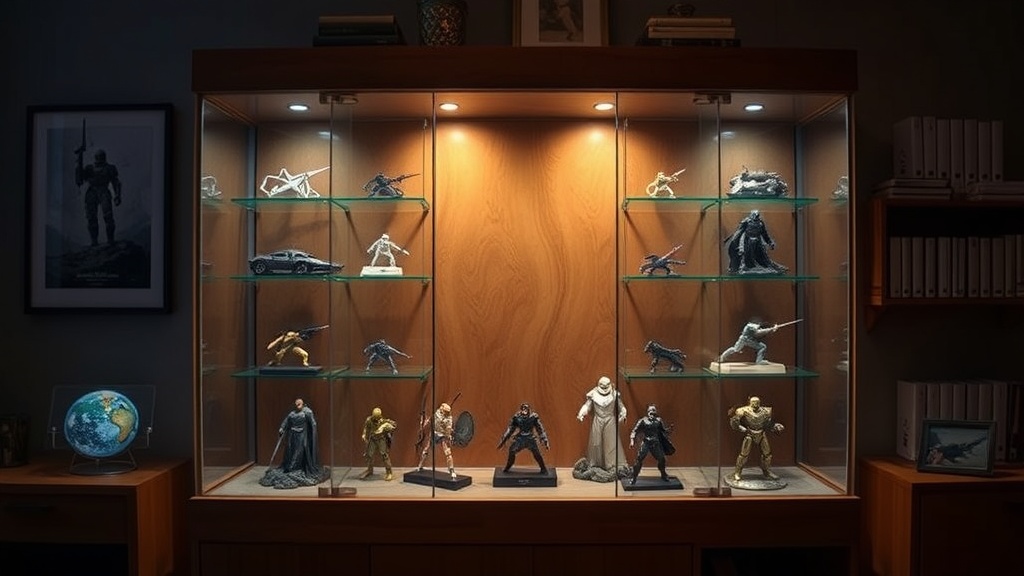
Building a Professional Grade Display Case for Your Collection

What Should You Look for in a Display Case?
This guide covers the technical requirements for building or purchasing a high-quality display system for your collectible figures and toys. You'll learn how to select materials that prevent yellowing, how to manage internal lighting without heat damage, and how to organize your collection for both wayfinding and aesthetics. A proper display is more than just a shelf; it's a protective barrier against the environment.
When you're starting out, it's easy to grab a cheap plastic bin or a glass cabinet from a big-box retailer. However, if you're serious about long-term preservation, you need to look closer at the materials. Standard acrylic can sometimes harbor static, which attracts dust directly to your figures. Glass is a better option for clarity, but it's heavy and prone to shattering if not mounted correctly. If you're choosing between various options, consider the weight of your collection—especially if you own heavy resin statues or large-scale vinyl toys.
Light exposure is another factor that many collectors overlook until it's too late. UV rays are the enemy of pigment. If your display sits near a window, your vibrant paint jobs will fade into dull, washed-out versions of themselves. Always check if your case offers UV protection or if you'll need to add a UV-filtering film to your windows. It's a small step that saves a lot of heartache later.
Can LED Lights Damage My Figures?
Lighting is what makes a collection pop, but it's also a potential hazard. Traditional incandescent bulbs generate heat, and that heat is a silent killer for plastic. It can soften joints, cause paint to become tacky, or even warp the structure of a figure over time. This is why LED technology has become the standard for high-end collectors.
LEDs are much cooler than traditional bulbs, but you still shouldn't crowd them. If you're using LED strips, make sure they aren't touching the figure directly. A little bit of air gap goes a long way. You want the light to hit the figure, not cook it. If you're looking for professional-grade lighting advice, the Canadian Conservation Institute offers extensive documentation on how light and temperature affect physical objects. While they focus on museum-grade artifacts, their principles apply perfectly to high-end toy collecting.
- Avoid direct contact: Keep light sources at least a few inches away from the figure.
- Check the wattage: Even with LEDs, high-wattage setups can generate heat.
- Color temperature: Use warm white for a classic look and cool white to make bright colors pop.
- Battery vs. Plug-in: Battery-operated lights are easy but can be a hassle; plug-in-driven LEDs offer more consistent brightness.
A common mistake is using too much light. If every single figure is under a spotlight, the overall glare makes it hard to actually see the details of your collection. Instead, think about layering. Use ambient light for the whole case and then subtle accent lights to highlight your "grail" pieces. This creates depth and makes the display feel more professional and less like a cluttered warehouse.
How Do I Organize My Collection for Better Visibility?
Organization is about more than just fitting everything in a box. It's about how you interact with your collection. Do you want a chronological display? A color-coordinated one? Or perhaps a tiered approach based on scale? The way you arrange your figures dictates how much you'll actually enjoy looking at them.
Tiered shelving is a great way to ensure that the figures in the back don't get lost behind the ones in the front. Using acrylic risers is a cheap and effective way to add height. This is especially helpful when you're mixing different scales, like 1/12 scale action figures with 1/6 scale statues. Without risers, the smaller figures often look dwarfed and insignificant. If you're looking for inspiration on how to display complex shapes, checking out the community discussions on ToyArk can provide great visual examples of how others manage their shelf space.
Consider the "rule of three" when placing your centerpieces. Grouping items in odd numbers—three or five—usually looks more natural to the human eye than even groupings. If you have a massive collection, don't try to show everything at once. It's better to have a rotating display where you can swap out pieces every month. This keeps the collection feeling fresh and prevents the "visual noise" that happens when too many objects compete for your attention.
Managing Dust and Maintenance
Dust is inevitable, but it doesn't have to be a constant battle. A sealed display case is your best defense. If you're building a custom wooden cabinet, ensure the joints are tight. Even a tiny gap can allow dust mot-sized particles to enter and settle on your figures' shoulders or heads.
When it comes to cleaning, never use harsh chemicals. A simple, soft-bristled makeup brush is the best tool for removing dust from intricate parts like capes or hair sculpts. Avoid using canned air for cleaning figures, as the high pressure can sometimes knock small accessories loose or even damage delicate paint applications. A gentle touch is always better. If you're cleaning a glass case, use a microfiber cloth to avoid streaks that might distract from the view. This is a habit that will serve you well as your collection grows and becomes more valuable.
| Material | Pros | Cons |
|---|---|---|
| Acrylic | Lightweight, clear, easy to cut | Static attracts dust, can scratch easily |
| Glass | Premium look, scratch-resistant | Heavy, can shatter, requires more care |
| Polystyrene | Very cheap, easy to find | Prone to yellowing, looks much less professional |
Ultimately, your display is a way to celebrate your passion. Whether you're using a professional glass vitrine or a well-organized bookshelf, the goal is to create a space where your items can be seen and enjoyed without the fear of environmental degradation. Take your time with the setup—it's an investment in your collection's future.