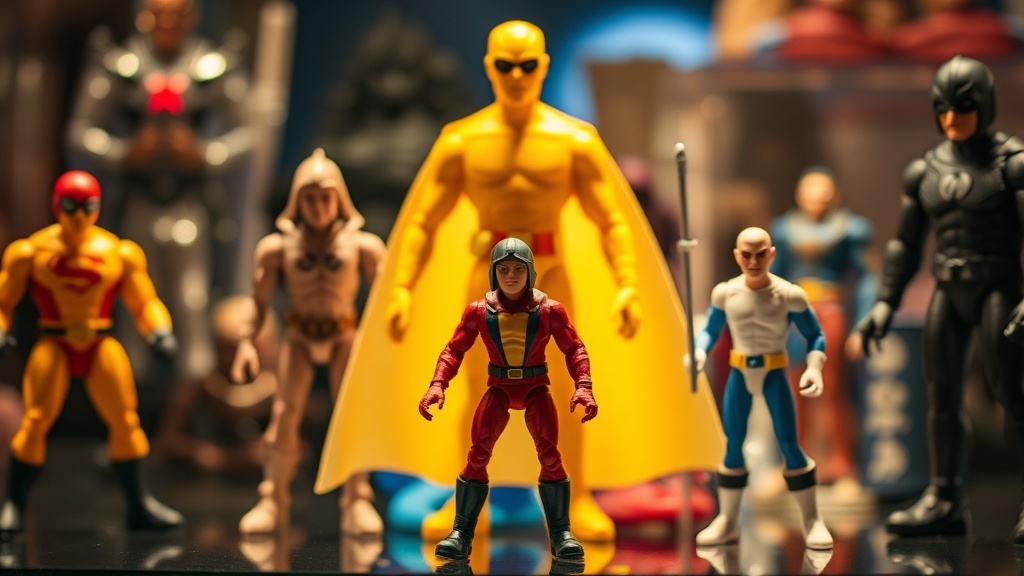
7 Rare Action Figures Worth a Small Fortune Today

1978 Vinyl Cape Jawa - Star Wars
1985 Snake Eyes with Timber - G.I. Joe
1982 Skeletor First Edition - Masters of the Universe
1984 Optimus Prime MIB - Transformers
1979 Boba Fett Rocket-Firing Prototype
1986 Thundercats Lion-O with Snarf
1995 Toy Story Woody Prototype
Collectors today are discovering that vintage action figures from the 1970s through 1990s command staggering prices at auction. This post breaks down seven specific figures that have appreciated dramatically, explaining what makes each valuable and what condition factors matter most. Whether you're cleaning out an attic or building a serious collection, you'll find concrete price ranges and authentication tips for each item.
What Makes an Action Figure Valuable?
The market for rare action figures isn't arbitrary. Value stems from a combination of scarcity, cultural impact, and physical condition. Figures produced in limited runs, those tied to beloved franchises, and items still sealed in original packaging typically fetch the highest prices.
Here's the thing: condition grading matters enormously. Professional grading services like CGC and AFA (Action Figure Authority) evaluate figures on a 10-point scale. A loose figure with paint wear might sell for $50 while the same item graded 9.0+ in sealed packaging can command thousands. Original accessories, unbroken joints, and factory-applied paint that hasn't yellowed all contribute to higher grades.
Provenance plays a role too. Figures with documented production histories, early run variants, or samples that never hit mass retail carry premiums. Factory errors—like miscolored limbs or missing paint apps—can actually increase value if they're rare enough.
Which Star Wars Figures Are Worth the Most Money?
Original 1978-1985 Kenner Star Wars figures dominate the high-end market, with certain characters and variants commanding five-figure sums at auction.
Vinyl Cape Jawa (1978)
The Vinyl Cape Jawa represents one of the most famous production changes in toy history. Kenner originally released the Jawa with a vinyl cape, identical to the material used for Darth Vader and Obi-Wan Kenobi. After a few months, they switched to a cloth cape with sewn edges because the vinyl looked cheap compared to the figure's $2.49 price point.
That short production window makes vinyl capes scarce. A graded example in AFA 85 condition sold for $18,000 in 2023. Loose versions with the cape intact still fetch $1,500-$3,000 depending on cape quality.
Authentication matters here. Reproduction vinyl capes flood the market. The original cape has a distinct texture and stiffness—it's thinner than the reproductions and folds differently. The figure itself should have a COO (Country of Origin) stamp reading "Hong Kong" on the back of the right leg.
Telescoping Lightsaber Darth Vader (1978)
Early production Darth Vader figures featured a double-telescoping lightsaber mechanism. The small tip extended from a larger middle section, which then extended from the arm. Kenner simplified this to a single extension within months because the small tip broke off easily.
Complete double-telescoping sabers in working condition are museum-grade rarities. Carded examples have exceeded $30,000 at auction. Even loose figures with the full mechanism intact sell for $2,000-$5,000.
Are 1980s G.I. Joe Figures Worth Collecting?
Yes—particularly the original 1982-1994 ARAH (A Real American Hero) line, with certain variants and prototypes reaching impressive prices.
Snake Eyes (Version 1, 1982)
The original straight-arm Snake Eyes—named for his all-black design and commando backstory—launched as part of the first 3.75-inch G.I. Joe wave. The "straight-arm" designation matters: early figures had single-piece arms without the swivel bicep that became standard in 1983. This made posing limited and the figures less durable.
That said, straight-arm Snake Eyes in complete condition (Uzi submachine gun, silencer, and explosives pack) regularly sell for $800-$1,200. Graded carded examples can exceed $5,000.
Paint variance creates additional value tiers. Early production figures have a glossier black paint that appears almost wet. Later runs switched to a flatter finish. The gloss variants command 20-30% premiums.
Storm Shadow (Version 1, 1984)
Storm Shadow's white ninja design made him an instant standout, and his complex backstory with Snake Eyes added depth that resonated with collectors. Complete loose figures with all accessories—bow, two arrows, backpack, and nunchuks—sell for $300-$500.
The real money lies in the "Cobra Logo" variant. Early cardbacks featured the Cobra organization logo behind Storm Shadow, establishing him as a villain. Later production removed this logo. Carded examples with the Cobra logo present have sold for $8,000+ when graded highly.
What About 1990s Figures? Are Any Worth Money?
The 1990s produced surprisingly valuable figures, particularly from lines that failed commercially and saw limited production runs.
Star Wars: Episode I — Darth Maul (Electronic Talking Version, 1999)
Hasbro's Episode I line overproduced most characters, flooding the market with Qui-Gon Jinn and Queen Amidala figures destined for discount bins. The electronic talking Darth Maul was different. It featured light-up lightsaber effects and voice clips at a higher price point, which limited initial sales.
The catch? Many remained unsold and were eventually discarded by retailers. Mint-in-box examples have appreciated to $400-$600, while AFA-graded specimens can reach $1,200. The figure's detailed sculpt and cloth robe still hold up today—unusual for late-1990s mass-market toys.
Spawn Series 1 — Spawn (Black Suit Variant, 1995)
Todd McFarlane's Spawn line revolutionized action figure detail standards in 1995. The Series 1 Spawn figure featured intricate sculpting, multiple accessories, and a comic-accurate design that made competing superhero figures look dated.
Most Series 1 Spawn figures wore green-accented costumes—the standard comic color scheme. A small production run featured black suit variants with red accents instead. These weren't marketed as variants; they simply appeared in cases randomly.
Black suit variants in sealed clamshell packaging command $800-$1,500 depending on paint application quality. The variant wasn't discovered as "special" until years after release, meaning most were opened and played with. Sealed examples are genuinely scarce.
How Do Prices Compare Across These Figures?
Understanding relative value helps collectors prioritize. Here's how these seven figures stack up in the current market:
| Figure | Year | Loose (Complete) | Graded Carded (AFA 85+) |
|---|---|---|---|
| Vinyl Cape Jawa | 1978 | $1,500 - $3,000 | $15,000 - $25,000 |
| Telescoping Vader | 1978 | $2,000 - $5,000 | $25,000 - $35,000 |
| Straight-Arm Snake Eyes | 1982 | $800 - $1,200 | $4,000 - $8,000 |
| Cobra Logo Storm Shadow | 1984 | $300 - $500 | $6,000 - $10,000 |
| Electronic Darth Maul | 1999 | $150 - $250 | $800 - $1,500 |
| Black Suit Spawn | 1995 | $200 - $400 | $800 - $1,800 |
Worth noting: loose prices assume complete accessories and good paint. Missing weapons, broken joints, or significant play wear can reduce values by 60-80%. Carded prices require unpunched cards, clear bubbles without yellowing, and no price sticker residue.
Where Should You Buy and Sell High-Value Figures?
Authentication and buyer protection matter when dealing with four-figure collectibles. Established auction houses like Heritage Auctions specialize in vintage toys and provide condition guarantees. Their quarterly toy auctions attract serious collectors and achieve strong realized prices for authenticated rarities.
For private sales, collector forums like the YoJoe G.I. Joe Forum and Rebelscum's Star Wars community offer vetted buyers with reference histories. These communities self-police against reproductions and maintain running lists of known counterfeiters.
eBay works for lower-value items ($500 and under) but requires careful seller evaluation. Look for detailed photos, established feedback scores above 500, and willingness to provide additional images. Never purchase high-value vintage figures from sellers using stock photos.
Facebook Marketplace and Craigslist occasionally yield local finds at below-market prices. The risk—obviously—is carrying cash to meet strangers. Fredericton's collector community is tight-knit; local toy shows at the Exhibition Grounds happen twice yearly and provide safer venues for in-person deals.
What Condition Issues Should You Watch For?
Even valuable figures lose significant worth from preventable damage. Kenner's 1970s plastic formulation is prone to "gold plastic syndrome"—a chemical breakdown that makes limbs brittle and prone to cracking. The gold plastic used for C-3PO and some accessory pieces degrades faster than other colors.
G.I. Joe figures from 1982-1985 suffer from o-ring deterioration. The rubber ring connecting the torso to the legs becomes brittle after 30+ years, causing figures to fall apart. Replacement o-rings are available, but reassembly requires opening the figure—permanent modification that grading services penalize heavily.
Paint rub on raised edges—knees, elbows, noses—occurs even on carefully stored figures. Carded figures can develop "curl" where the cardboard backing warps from humidity changes. Neither issue is reversible, so prevention through climate-controlled storage remains the only solution.
Reproduction weapons plague every valuable line. Original Kenner blasters have specific mold marks and plastic textures that experts recognize instantly. When in doubt, reference the Imperial Gunnery database for Star Wars accessories or the YoJoe archive for G.I. Joe gear.
"The best investment isn't always the most expensive figure on the shelf—it's the one you can verify as authentic. Spend money on documentation before you spend it on the toy itself." — Collector wisdom from the Fredericton Toy Show, 2024
Building a collection of valuable action figures requires patience, research, and willingness to walk away from deals that feel rushed. The seven figures detailed here represent genuine opportunities for appreciation, but only when acquired at fair prices with confidence in authenticity. Start with what you can afford to learn on, verify everything twice, and remember that the hunt should be enjoyable—stressful purchases rarely lead to satisfying collections.